

Leadership is not a type.
It’s a practice.
Most leaders have been given models. Assessments. Frameworks that explain who they are as a leader.
Very few have been given a practice, a clear, integrated discipline for how to lead consistently, deliberately, and under pressure.
The Three Lenses of Leadership™ is Alison Geskin's flagship leadership framework. Built from years of executive coaching, leadership development, and organizational strategy work across industries, it gives leaders the one thing most models don't: a practice they can actually use.
Because leadership isn't about who you are. It's about how you lead, in each of the three places it matters.
Leadership development is everywhere.
Performance leadership is not.
Leaders today have read the books, completed the assessments, and learned the models. Most can name their type, their style, their dominant trait. Yet many still struggle to create consistent performance across their teams.
Why?
Because knowing what kind of leader you are doesn’t tell you what to do differently on Monday. The model gave leaders language. Practice creates results.
Most leadership development is also dangerously siloed:
Executive coaching lives almost entirely in Lead Yourself.
Team development work lives in Lead Your Team.
Strategy consulting operates almost entirely in Lead the Work.
What leaders actually need, and what no single discipline delivers, is the integration of all three.
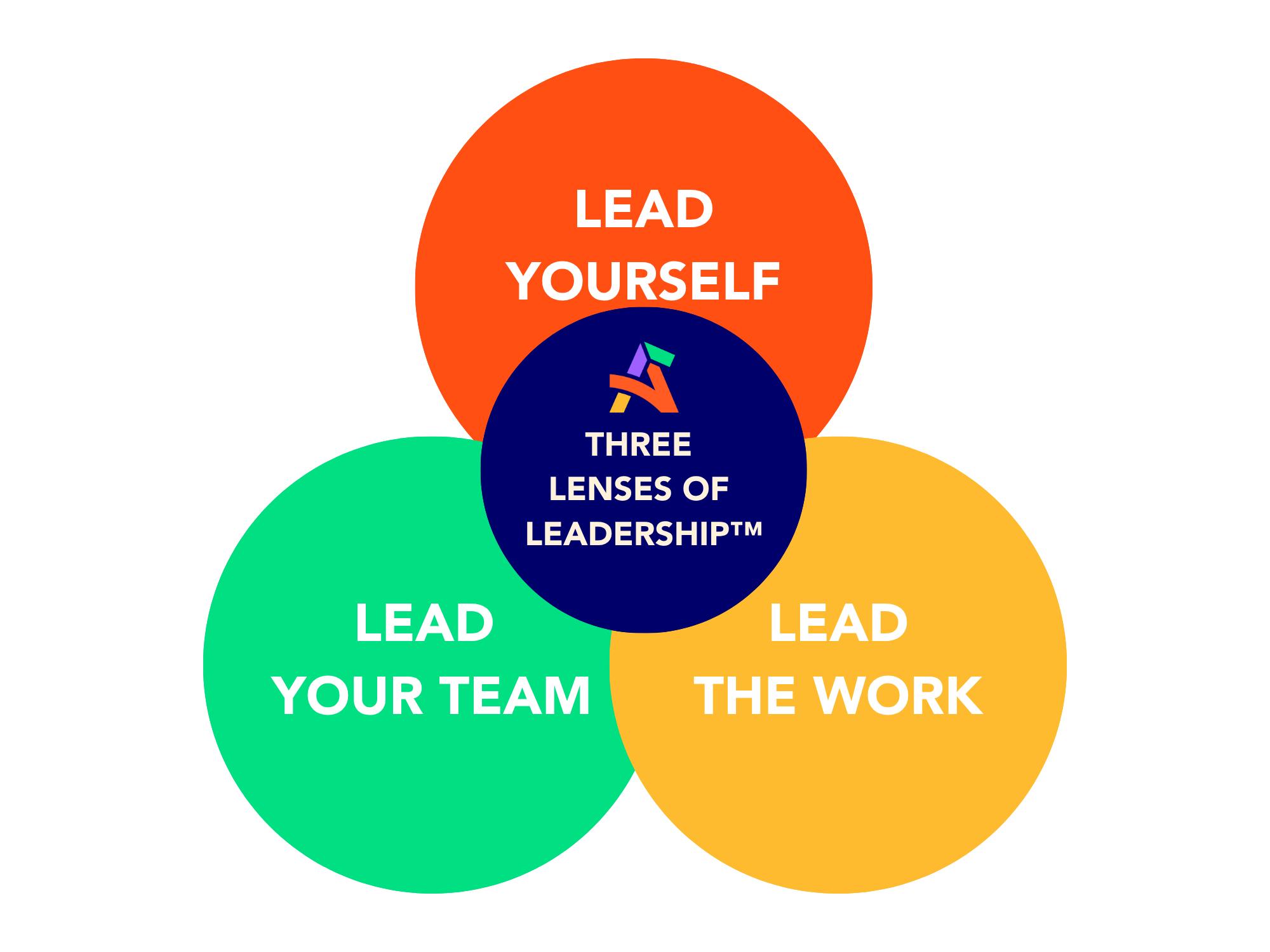
True leadership isn’t one lens. It’s three lenses held at the same time, under the same pressure.
Leadership isn’t soft. It’s performance infrastructure.
The evidence is consistent across decades of organizational research:
-
Up to 30%
of company performance is directly driven by organizational climate.
-
50–70%
of that climate is shaped by leadership behaviours, not strategy, not structure, not headcount.
-
70%
of team engagement variance traces directly to the immediate leader.
-
21%
higher quota attainment in teams where leaders coach behaviours, not just outcomes.
Leadership is the multiplier. And it is the one variable that every organization controls more than any other.
The question isn't whether leadership matters. It's whether your leaders are practicing it, across all three places it has to show up
The strongest leaders do three things exceptionally well, and they do them simultaneously.
The Three Lenses of Leadership™ names the three distinct domains of leadership that have to be practiced together for performance to hold. Most models specialize in one. The Three Lenses is the integration model.
LENS A: LEAD YOURSELF
The inner discipline.
Presence, clarity, resilience, and self-awareness, particularly under pressure. It is how steady you are when the room isn't. It is whether the version of you that walks into a hard conversation is the version you intended, or the version pressure produced. Most leaders overestimate their own regulation under pressure. They assume that because they were calm in the planning meeting, they'll be calm in the crisis. The evidence says otherwise. Presence is not a trait you have, it's a discipline you practice, or it erodes.
Under pressure:When Lead Yourself is weak, the whole system feels it. Decisions get sharper in tone but less clear in substance. Small frustrations become the lead signal in the room. The leader becomes the source of the organization’s volatility rather than its anchor.
“Your state becomes the team’s standard.”
LENS B: LEAD YOUR TEAM
The interpersonal discipline.
Trust, communication, conflict resolution, and cohesion, how the team operates when you're in the room, and more importantly, when you're not. Under pressure, this is the first lens most leaders drop. Communication becomes transactional. One-on-ones get moved. Coaching conversations shrink to status updates. The leader is technically present, but the relational work that makes the team function has stopped.
Under pressure: A team that is under-led during a pressured quarter doesn't break that quarter. It breaks two quarters later, when the trust that should have been maintained was quietly depleted and nobody noticed until retention cratered.
“Same standards. Different conversations.”
LENS C: LEAD THE WORK
The operational discipline.
Strategy, prioritization, decision-making, and execution, the lens most directly connected to business performance. It is also the lens most leaders assume they're practicing, when what they're actually doing is reacting to the work rather than leading it. Leading the work means knowing which moves matter, protecting them from everything else, making decisions fast enough to maintain momentum, and holding the line on what the organization said it would do.
Under pressure: When Lead the Work is weak, strategy stalls. Not because the strategy was wrong. Because the leader stopped leading it and started carrying it. Carrying the work is a full-time job with no ceiling. Leading the work is a discipline with a clear shape.
“Lead the work. Don’t just carry it.”

This is not a menu. You don’t pick the lens you’re best at and specialize.
Under pressure, a weakness in any one lens propagates into the other two:
A leader who isn’t leading themselves cannot lead the team. Regulation is the prerequisite for coaching.
A leader who isn’t leading the team cannot lead the work. Execution depends on relational capacity.
A leader who isn’t leading the work cannot sustain themselves. Firefighting eventually burns the leader out.
This is why leadership development focused on a single lens almost always fails to stick. A self-awareness intervention that doesn’t connect to team behaviour and work output dies within a quarter. A team-building intervention that doesn’t connect to the operational discipline of the business feels like activity, not leadership.
The Three Lenses is the integration model, the frame that holds all three as a single discipline, practiced together, tested under the same pressure.
Under pressure, the weakest lens shows first. That’s where the work starts.
When pressure rises, leaders don't fail randomly. They fail predictably, in the lens they've been avoiding.
If your first casualty is presence, short with people, reactive in meetings, unable to sit with uncertainty, your weakest lens is Lead Yourself.
If your first casualty is connection, you stop one-on-ones, skip coaching conversations, move into command-and-control, your weakest lens is Lead Your Team.
If your first casualty is clarity, priorities blur, decisions stall, the plan starts to drift, your weakest lens is Lead the Work.
Every leader has a weak lens. And the lens you avoid is often the one capping your team's performance.
Awareness is only useful when it changes behaviour.
The Three Lenses of Leadership™ is built for leaders at every level, and the organizations that develop them.
For individual leaders:
Founders and business owners navigating growth and increasing complexity
Managers and emerging leaders stepping into greater responsibility
Directors and executives carrying high-stakes decisions under pressure
For organizations:
Leadership teams who need to align how they lead, not just what they decide
Organizations building leadership capability at scale
HR and L&D leaders who need a clean, credible framework their leaders will actually use
Because leadership is not what you believe. It’s what you repeatedly practice.

Stronger Together: The Three Lenses and the Strategy Flywheel™
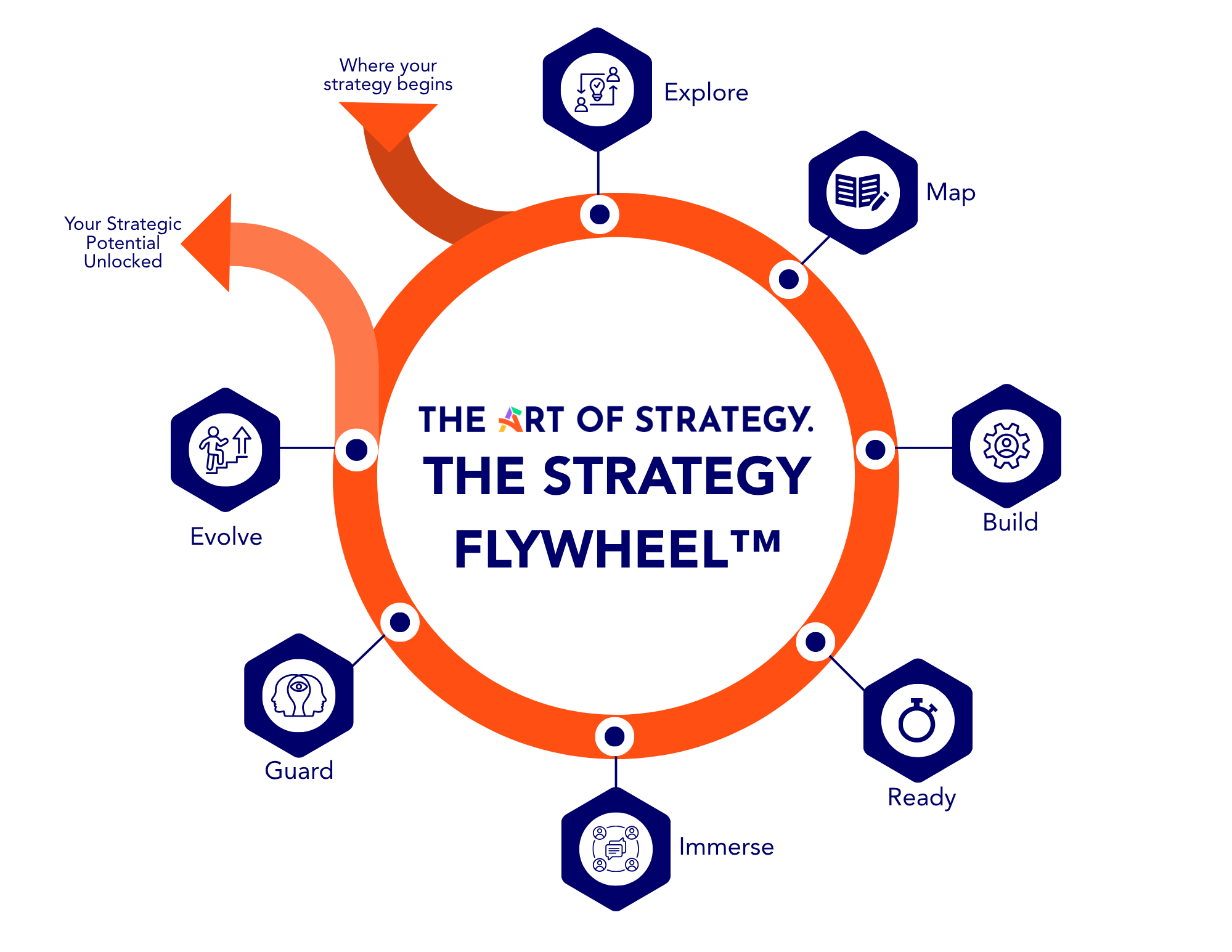
The Three Lenses of Leadership™ is the companion framework to the Strategy Flywheel™.
The Strategy Flywheel™ is the operating system that holds the work.
The Three Lenses of Leadership™ is the discipline that holds the leader.
They are commercially usable independently. But they are at their strongest together, because execution only holds when the system and the people operating it are designed to work under the same pressure.

The Three Lenses of Leadership™ is available as a keynote, workshop, or executive education program.
Leaders don’t need another model. They need a practice. Every delivery format is built around application, not awareness alone.
Keynote
A high-impact leadership experience for conferences, summits, and leadership events. Audiences leave with a clear framework, a pressure diagnostic, and one move they can make on Monday.
Workshop
A practical, application-focused session built for leadership teams. Teams leave with shared language, identified lens gaps, and a 90-day practice commitment.
Executive Education
A leadership capability program designed to build the Three Lenses discipline across a leadership population — with measurable behaviour change and performance outcomes.

Leadership is not what you believe.
It’s what you repeatedly practice.
Three lenses. One integrated discipline. Practiced together, under the same pressure, every day.
The question isn’t what kind of leader you are.
The question is: how are you leading right now, in each of the three places it matters?